
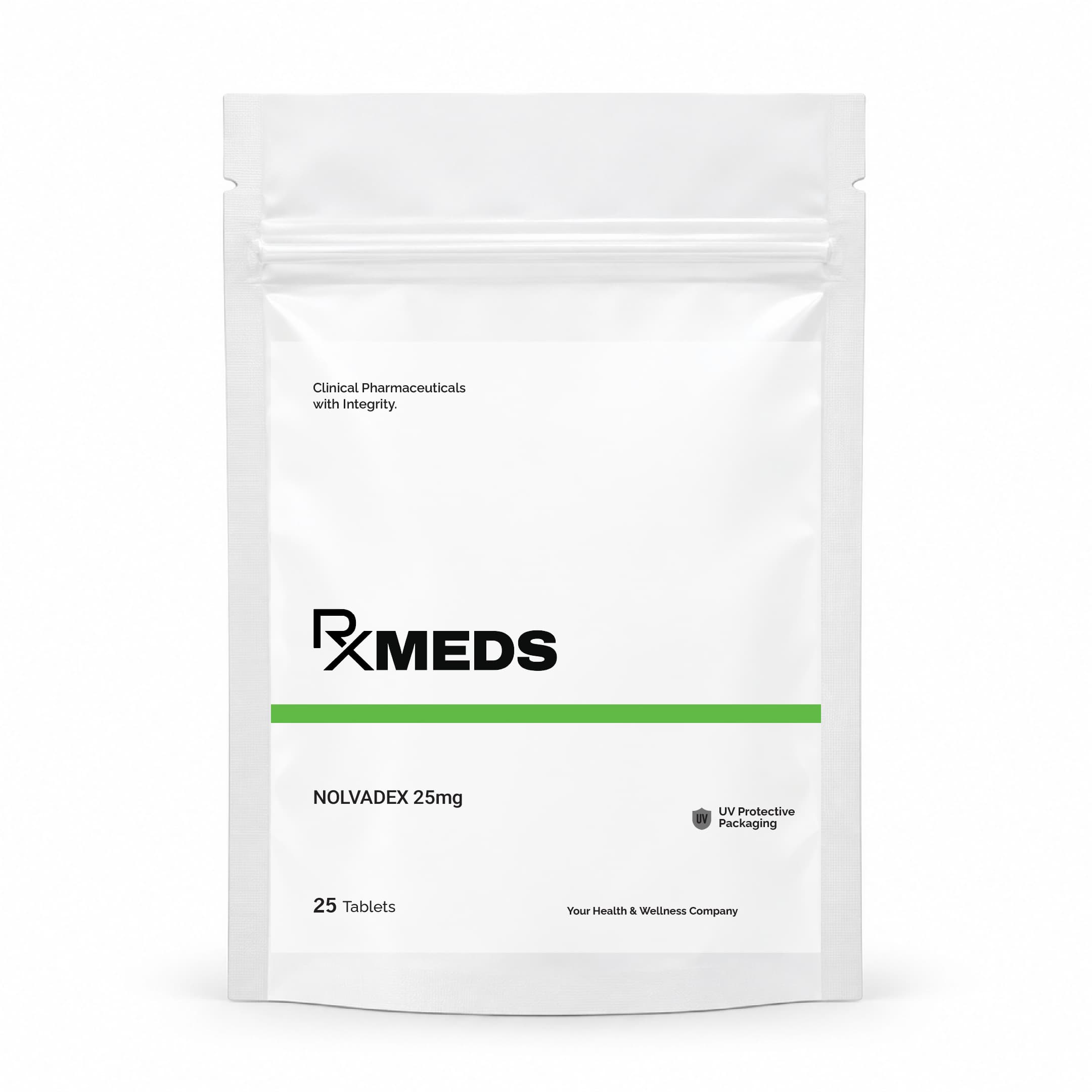
Nolvadex (Tamoxifen)
Few medications carry a backstory quite like Nolvadex (Tamoxifen). Originally developed as a failed contraceptive, it went on to become one of the most prescribed breast cancer drugs in history, a reversal few drugs ever experience.
An Accidental Breakthrough
Researchers at a British pharmaceutical company first synthesized this compound in the 1960s, hoping to create a morning-after contraceptive pill. Early trials revealed the opposite effect; instead of preventing pregnancy, the compound actually stimulated ovulation in some patients, making it entirely unsuitable for its intended purpose. Rather than abandon the compound, researchers noticed its anti-estrogen properties and redirected their efforts toward cancer treatment instead. That pivot led to FDA approval for breast cancer in 1977, and it eventually became the most prescribed breast cancer drug worldwide for decades.
How It Blocks Estrogen’s Effects
This medication works as a selective estrogen receptor modulator, meaning it blocks estrogen from binding to receptors in certain tissues while leaving estrogen’s effects intact in others. In breast tissue specifically, blocking that receptor interaction slows or stops the growth of estrogen-sensitive cancer cells. This selective action explains why it earned a place among the first targeted cancer therapies, treating cancer based on its specific biological drivers rather than broadly attacking all dividing cells.
What a 25mg Dose Treats
Doctors prescribe this medication for treating estrogen receptor-positive breast cancer, as well as for reducing breast cancer risk in high-risk patients who haven’t been diagnosed. Treatment typically continues for five to ten years in cancer patients, taken as a single daily dose. The 25mg strength often appears in protocols requiring more precise dosing adjustments compared to the more common 10mg or 20mg tablets.
Beyond Cancer Treatment
Bodybuilders and athletes have used this medication for decades as part of post-cycle therapy protocols, aiming to restore natural testosterone production after using anabolic steroids. Since steroid use often suppresses the body’s natural hormone signaling, this medication’s anti-estrogen effects help the body recalibrate its hormonal balance during recovery. This off-label use remains widespread in fitness communities, despite lacking FDA approval for that specific purpose.
Safety and Side Effects
Reported side effects include hot flashes, nausea, and menstrual irregularities in women, generally considered mild and manageable for most patients. More serious but rarer risks include increased chance of blood clots and, in some cases, uterine cancer with long-term use. Patients should discuss family history and personal risk factors with their doctor before starting treatment.
FAQ
What was Nolvadex originally developed for?
Researchers originally intended it as a contraceptive, but it stimulated ovulation instead, leading to its redirection toward cancer treatment.
How does this medication fight breast cancer?
It blocks estrogen from binding to receptors in breast tissue, slowing or stopping the growth of estrogen-sensitive cancer cells.
Why do bodybuilders use it off-label?
It’s commonly used in post-cycle therapy to help restore natural testosterone production after anabolic steroid use.
How long do cancer patients typically take it?
Treatment often continues for five to ten years, taken as a single daily dose.
What are the more serious risks?
Rare but serious risks include increased blood clot chances and, with long-term use, uterine cancer.
Be the first to review “Nolvadex (Tamoxifen) 25mg: Uses and History Guide”
Related products
Reviews
There are no reviews yet.