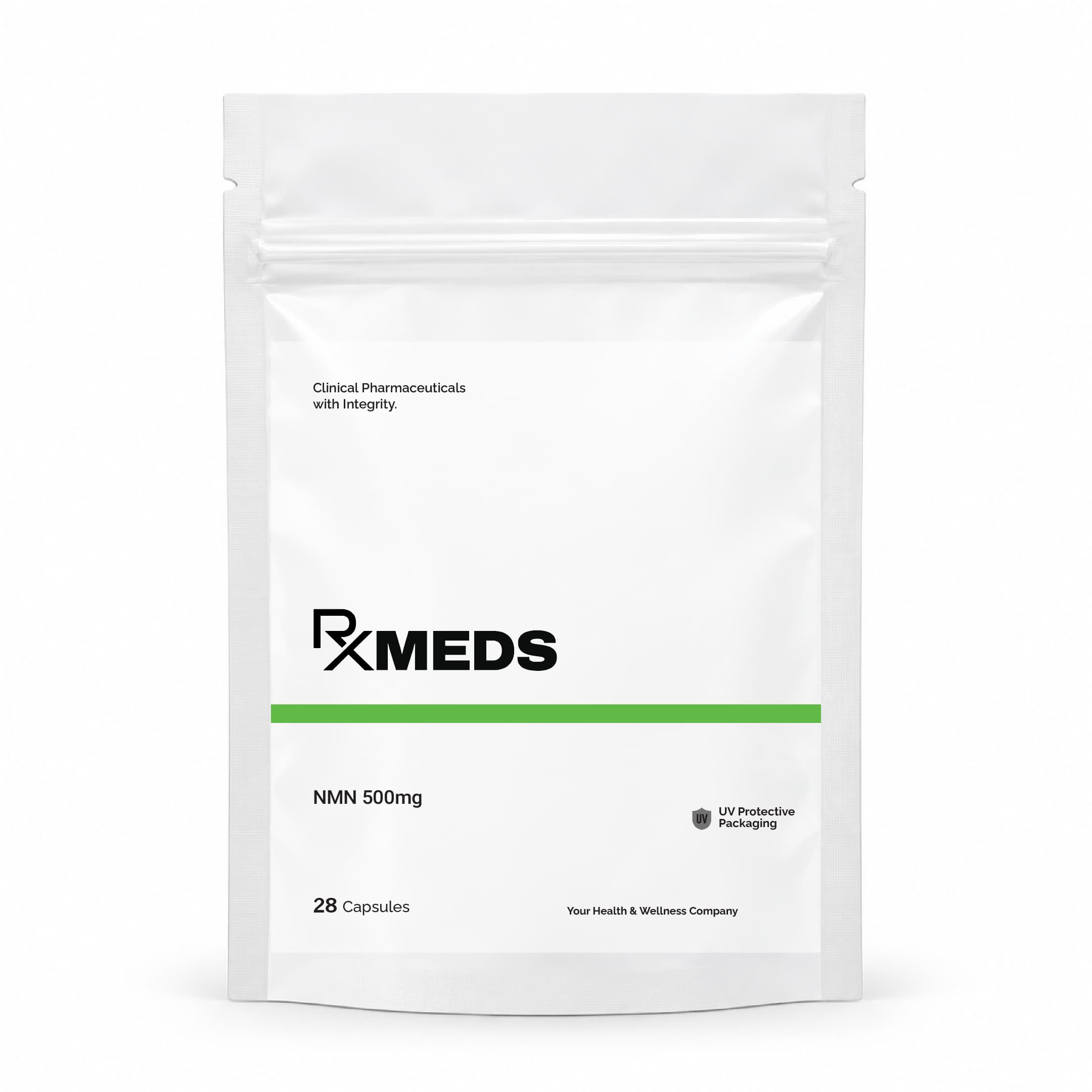
NMN 500mg
Your cells run on a molecule that quietly declines as you get older, and scientists have spent the last decade chasing ways to slow that drop. NMN, short for nicotinamide mononucleotide, sits at the center of that effort as a direct precursor to NAD+.
A Building Block for Cellular Energy
Your body naturally produces this compound as a step in creating NAD+, a molecule essential for converting food into usable cellular energy. NAD+ levels decline steadily with age, and researchers believe that drop contributes to many hallmarks of aging, from reduced energy production to impaired cellular repair. By supplying NMN directly, researchers hoped to boost NAD+ levels more efficiently than earlier precursor compounds allowed.
How It Supports NAD+ Production
This compound converts into NAD+ through a relatively short enzymatic pathway, making it one of the more direct routes available for raising cellular NAD+ levels. Once converted, NAD+ fuels hundreds of enzymatic reactions throughout the body, including those involved in DNA repair, mitochondrial function, and metabolic regulation. Researchers believe this direct pathway explains why interest in this compound grew quickly once animal studies began showing measurable NAD+ increases.
What a 500mg Quantity Offers
Suppliers typically package this compound as a powder, with 500mg representing a substantial quantity suited for ongoing research protocols. Most research involves oral administration, since this route has shown reasonable absorption in available studies compared to some other NAD+ precursors. Because research dosing varies depending on study goals, the 500mg quantity allows researchers to measure out multiple doses from a single supply.
What Animal and Early Human Research Shows
Mouse studies link this compound to improved insulin sensitivity, increased physical endurance, and better mitochondrial function with age. Early human trials, though still limited in scope, have shown it raises blood NAD+ levels safely without serious adverse effects in short-term studies. However, researchers caution that evidence connecting raised NAD+ levels to specific anti-aging outcomes in humans remains preliminary compared to the more established animal data.
Safety and Regulatory Standing
This compound shows a generally favorable safety profile in available research, with most studies reporting no serious side effects at tested doses. That said, the FDA hasn’t approved it as a drug for any specific condition, and it occupies an unusual regulatory space between dietary supplement and research compound, following a 2022 FDA ruling affecting its supplement status. Researchers should verify current regulatory guidance and sourcing quality carefully.
FAQ
What does NMN do in the body?
It converts into NAD+, a molecule essential for cellular energy production, DNA repair, and metabolic regulation.
Why does NAD+ matter for aging research?
NAD+ levels decline steadily with age, and researchers link that drop to reduced energy production and impaired cellular repair.
What has animal research shown?
Mouse studies link it to improved insulin sensitivity, increased endurance, and better mitochondrial function with age.
Has it been tested in humans?
Early human trials show it raises NAD+ levels safely, though evidence connecting that to specific anti-aging outcomes remains preliminary.
Is it approved as a dietary supplement?
Its regulatory status has shifted following a 2022 FDA ruling, so researchers should verify current guidance before use.
Be the first to review “NMN 500mg: The Cellular Energy Research Guide”
Related products
Reviews
There are no reviews yet.