
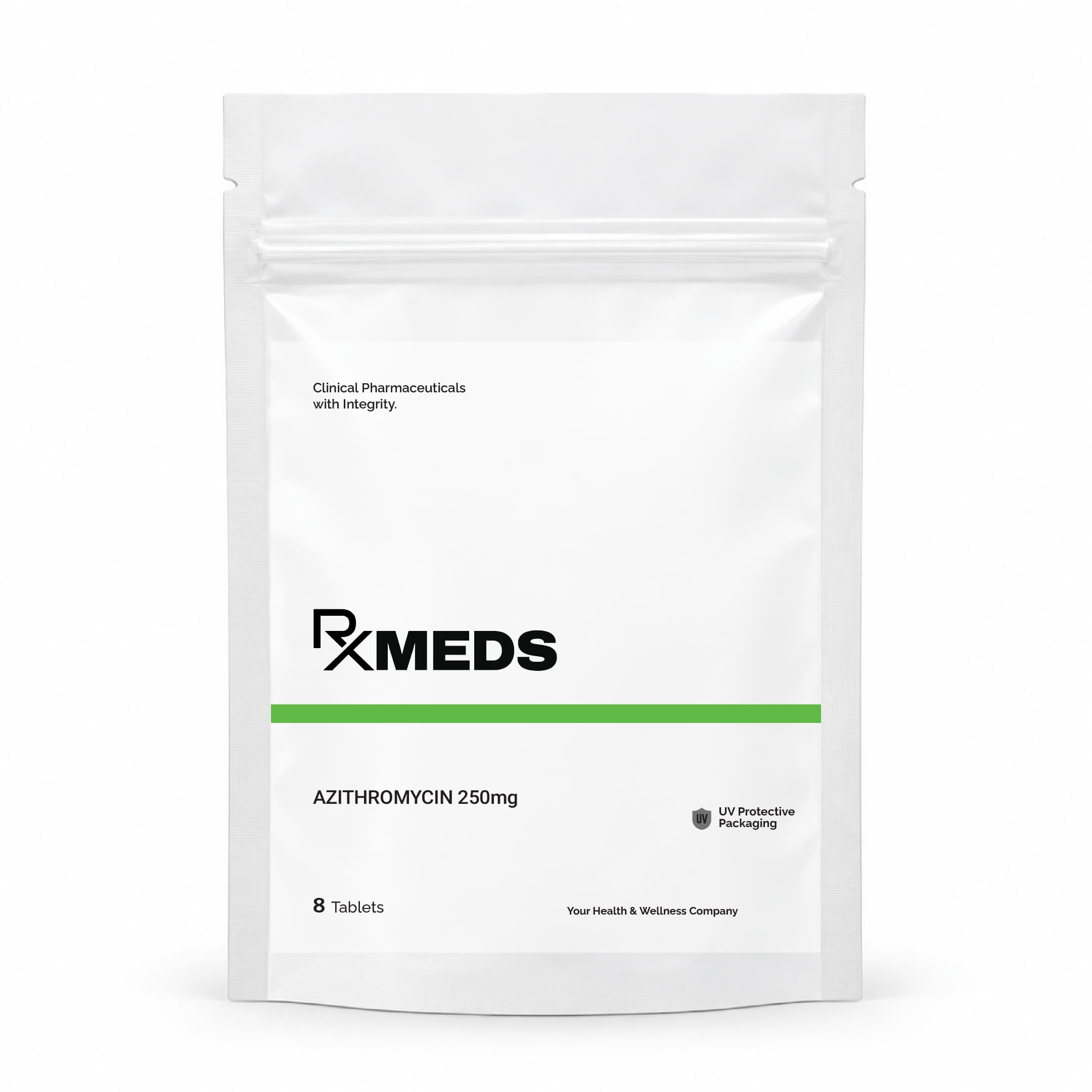
Azithromycin 250mg
Most antibiotics demand a week or more of consistent dosing before finishing the job. Azithromycin has built its reputation on doing the opposite, earning the nickname “Z-Pack” for a treatment course that wraps up in just a few days.
The Antibiotic Built for Convenience
Pharmaceutical researchers developed this medication as part of the macrolide class, engineering it specifically to stay active in body tissue far longer than older antibiotics in the same family. That extended tissue retention allowed for a dramatically shorter dosing schedule compared to predecessors like erythromycin. Patients and doctors alike gravitated toward this convenience, helping it become one of the most recognizable antibiotic brand names in recent decades.
How It Stops Bacterial Growth
This medication works by binding to bacterial ribosomes, blocking the protein production bacteria need to grow and multiply. Once protein synthesis stops, bacteria can’t maintain their cellular functions or reproduce, allowing the immune system to clear the remaining infection. Its long half-life means the medication keeps working in tissue for days after the last dose, unlike antibiotics that clear the body more quickly.
What a 250mg Dose Treats
Doctors prescribe this strength for respiratory infections, including bronchitis and certain types of pneumonia, as well as ear infections and some sexually transmitted infections. The classic five-day regimen typically starts with a higher first-day dose, followed by a lower daily dose for the remaining four days. This front-loaded approach helps establish effective levels quickly while still completing treatment faster than many other antibiotics.
Why Doctors Favor the Short Course
Beyond convenience, the shorter treatment duration tends to improve patient compliance, since people are more likely to finish a five-day course than a ten-day one. This medication also causes fewer stomach-related side effects than some other antibiotics, making it a more tolerable option for patients prone to digestive upset. These combined advantages have kept it a frequently prescribed choice despite the availability of other effective antibiotics.
Important Considerations
This medication doesn’t work against viral infections like colds or the flu, and doctors specifically reserve it for confirmed or suspected bacterial infections. Overuse for inappropriate conditions has contributed to rising bacterial resistance in recent years, prompting more cautious prescribing practices. Patients should complete the full course exactly as prescribed, even with its shorter duration, to avoid leaving residual bacteria behind.
Safety and Side Effects
Reported side effects include nausea, diarrhea, and stomach discomfort, generally milder than reactions to other antibiotic classes. More serious but rare risks include heart rhythm changes, particularly in patients with existing heart conditions or those taking certain other medications. Patients with liver problems or a history of irregular heartbeat should discuss these risks with their doctor before starting treatment.
FAQ
Why is Azithromycin called the “Z-Pack”?
Its brand name and classic five-day regimen, often starting with a higher first dose, earned it that popular nickname.
What infections does Azithromycin 250mg treat?
Doctors prescribe it for respiratory infections, ear infections, and certain sexually transmitted infections.
Why is the treatment course so short?
The medication stays active in body tissue far longer than older antibiotics, allowing effective treatment in fewer days.
Does it work against viral infections like colds?
No. It only treats bacterial infections and has no effect on viruses.
What’s a serious risk to be aware of?
Heart rhythm changes, particularly in patients with existing heart conditions or those on certain other medications.
Be the first to review “Azithromycin 250mg: The Z-Pack Antibiotic Guide”
Related products
Reviews
There are no reviews yet.