
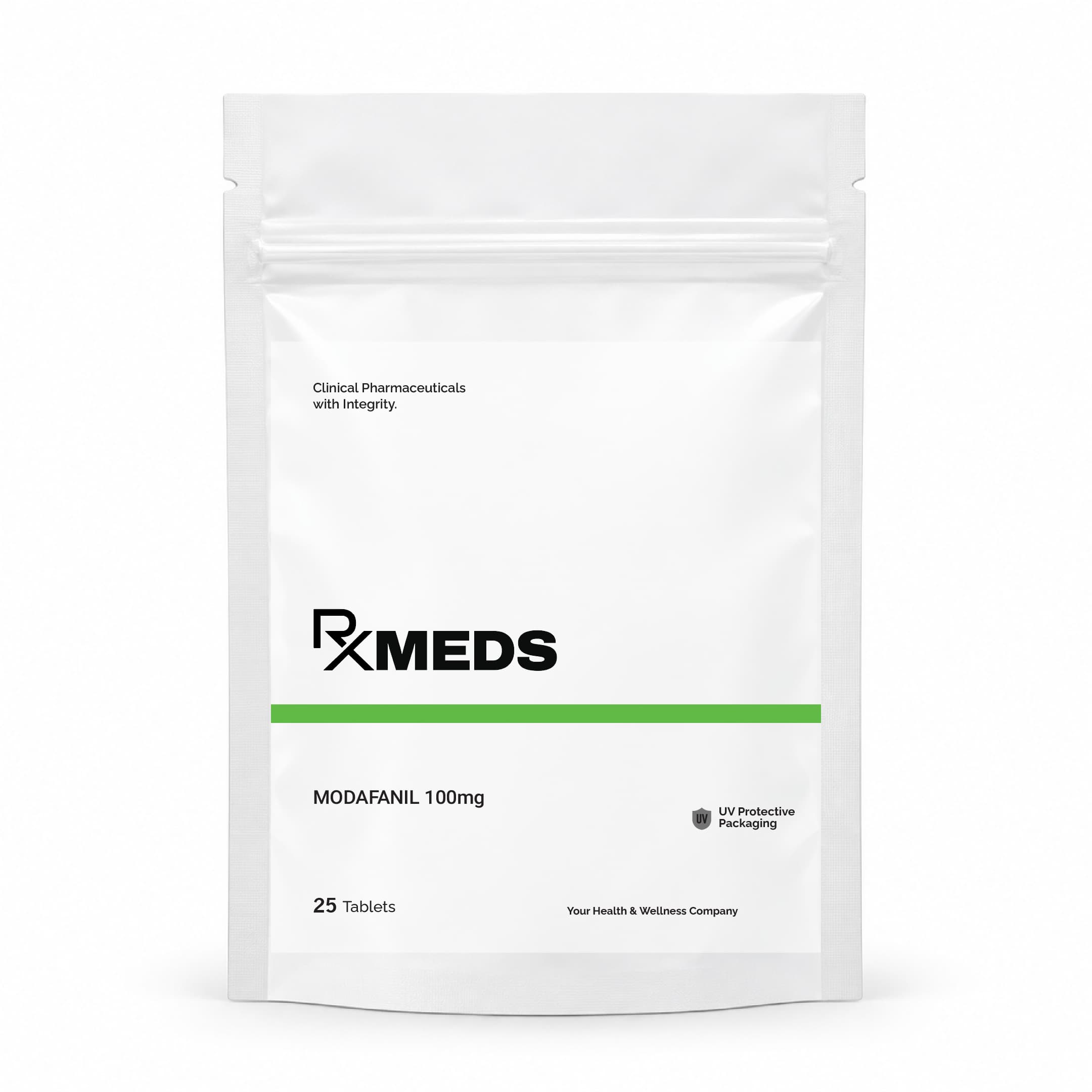
Modafinil 100mg
Long-haul truckers, shift workers, and narcolepsy patients share one common struggle: staying awake when their body desperately wants otherwise. Modafinil emerged specifically to address that problem, offering a different approach than traditional stimulants.
A Different Kind of Wakefulness Drug Modafinil
Pharmaceutical researchers developed this medication in France during the 1970s and 1980s, originally studying it as a treatment for narcolepsy. Unlike amphetamine-based stimulants that flood the brain with dopamine broadly, this compound works through a more targeted mechanism, earning it classification as a “wakefulness-promoting agent” rather than a traditional stimulant. That distinction became central to its appeal among doctors and patients alike.
How It Promotes Wakefulness
Scientists haven’t fully mapped out this medication’s exact mechanism, though it appears to influence dopamine, norepinephrine, and histamine pathways involved in regulating sleep and wakefulness. Because it works more selectively than amphetamines, it tends to produce fewer of the jittery, anxious side effects associated with traditional stimulants. Researchers believe this selective action also explains its lower potential for abuse compared to older wakefulness medications.
What a 100mg Dose Treats
Doctors prescribe this strength for narcolepsy, obstructive sleep apnea, and shift work sleep disorder, conditions that all involve excessive daytime sleepiness despite adequate or attempted sleep. Patients typically take it once daily in the morning for narcolepsy and sleep apnea, or before a work shift for shift work disorder. The 100mg dose often serves as a starting point, with doctors adjusting up to 200mg based on patient response.
Off-Label and Research Interest
Beyond its approved uses, this medication has drawn significant interest for off-label cognitive enhancement, with some users reporting improved focus and alertness during demanding mental tasks. Military and academic research has explored its potential for sustaining performance during extended periods without sleep. This off-label use remains widespread despite lacking FDA approval for cognitive enhancement specifically in healthy individuals.
Safety and Side Effects
Reported side effects include headache, nausea, and nervousness, generally considered mild in most patients. More serious but rare risks include severe skin reactions and psychiatric effects like anxiety or mood changes. Patients with heart conditions should use caution, since this medication can increase blood pressure and heart rate in some individuals.
FAQ
What conditions does Modafinil 100mg treat?
Doctors prescribe it for narcolepsy, obstructive sleep apnea, and shift work sleep disorder.
How is it different from traditional stimulants?
It works through a more targeted mechanism, producing fewer jittery side effects and carrying lower abuse potential than amphetamines.
Why do some people use it off-label?
Some use it for cognitive enhancement, reporting improved focus during demanding mental tasks, though this isn’t an approved use.
When should this medication be taken?
Typically once daily in the morning for narcolepsy and sleep apnea, or before a shift for shift work disorder.
What are the most common side effects?
Headache, nausea, and nervousness rank among the most frequently reported side effects.
For more info, reach out to us on our contact
Be the first to review “Modafinil 100mg: The Wakefulness Medication Guide”
Related products
Reviews
There are no reviews yet.