
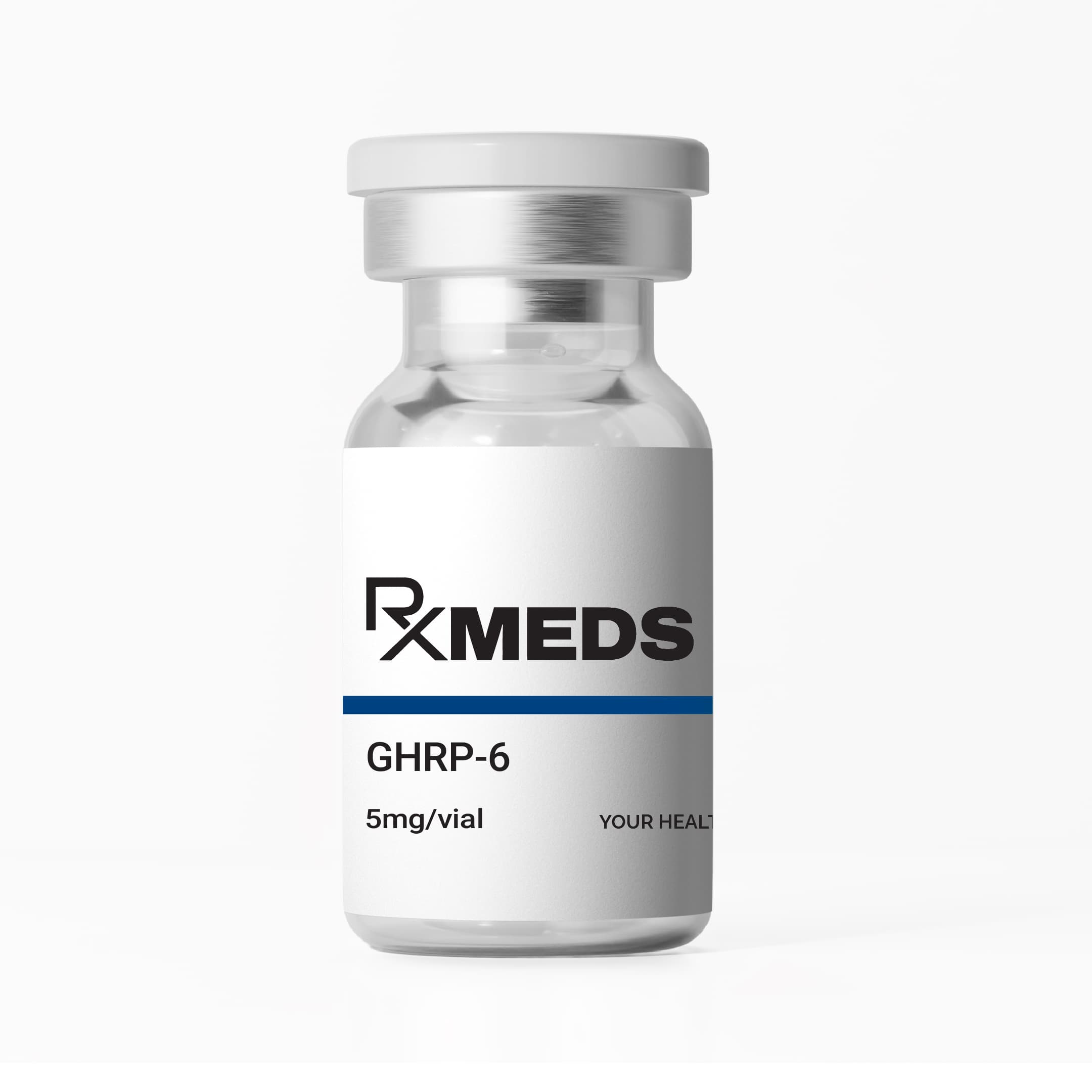
GHRP-6
Before researchers developed cleaner alternatives like Ipamorelin, GHRP-6 led the pack of growth hormone-releasing peptides. It still holds a place in research circles today, despite a side effect profile that pushed scientists to look for better options.
An Early Entry in a Growing Category
Scientists developed this peptide decades ago as part of a broader search for compounds that could stimulate the pituitary gland without relying on actual growth hormone injections. It belongs to a class called growth hormone secretagogues, molecules that trigger the body’s own hormone release rather than introducing synthetic hormone directly. That approach appealed to researchers hoping to work with a more natural release pattern.
How It Triggers Growth Hormone Release
This peptide activates the ghrelin receptor, prompting the pituitary gland to release growth hormone in pulses. Unlike more selective peptides developed later, it also significantly raises cortisol and prolactin levels, along with a pronounced increase in appetite. That hunger-inducing effect actually makes it unique among growth hormone peptides, since researchers and users sometimes seek it out specifically for that reason, rather than despite it.
What’s Inside a 5mg Vial
Suppliers package this peptide as a freeze-dried powder, with a 5mg vial providing enough material for multiple doses once reconstituted with bacteriostatic water. Most research protocols involve subcutaneous injection, often timed around meals given the peptide’s strong appetite-stimulating effect. Researchers commonly dose it multiple times daily in study designs, since its effects don’t last as long as some longer-acting alternatives.
Research Interest and Applications
Studies link this peptide to increased growth hormone output, supporting interest in muscle growth, fat metabolism, and recovery applications. Its strong appetite stimulation has also drawn attention from researchers studying conditions involving appetite loss, including certain muscle-wasting diseases. However, the same cortisol and prolactin increases that distinguish it from newer peptides also limit its appeal for researchers prioritizing a cleaner hormonal profile.
Handling and Legal Considerations
Once reconstituted, researchers should keep the solution refrigerated and use it within a limited timeframe to preserve potency. No regulatory agency, including the FDA, has approved this peptide for human use. Sellers market it strictly as a research compound.
FAQ
What’s included in a 5mg GHRP-6 vial?
A freeze-dried powder requiring reconstitution with bacteriostatic water before administering via subcutaneous injection.
How is this peptide different from newer options like Ipamorelin?
It significantly raises cortisol and prolactin alongside growth hormone, while newer peptides avoid those additional hormonal spikes.
Why does it increase appetite so strongly?
Its activation of the ghrelin receptor triggers hunger signals strongly, a side effect some researchers specifically study rather than avoid.
How often do research protocols typically dose it?
Multiple times daily in many study designs, since its effects don’t last as long as longer-acting alternatives.
Is it approved for human use?
No. It’s sold strictly as a research chemical, with no FDA approval or standardized quality oversight.
Be the first to review “GHRP-6 5mg: A Research Guide”
Related products
Reviews
There are no reviews yet.