
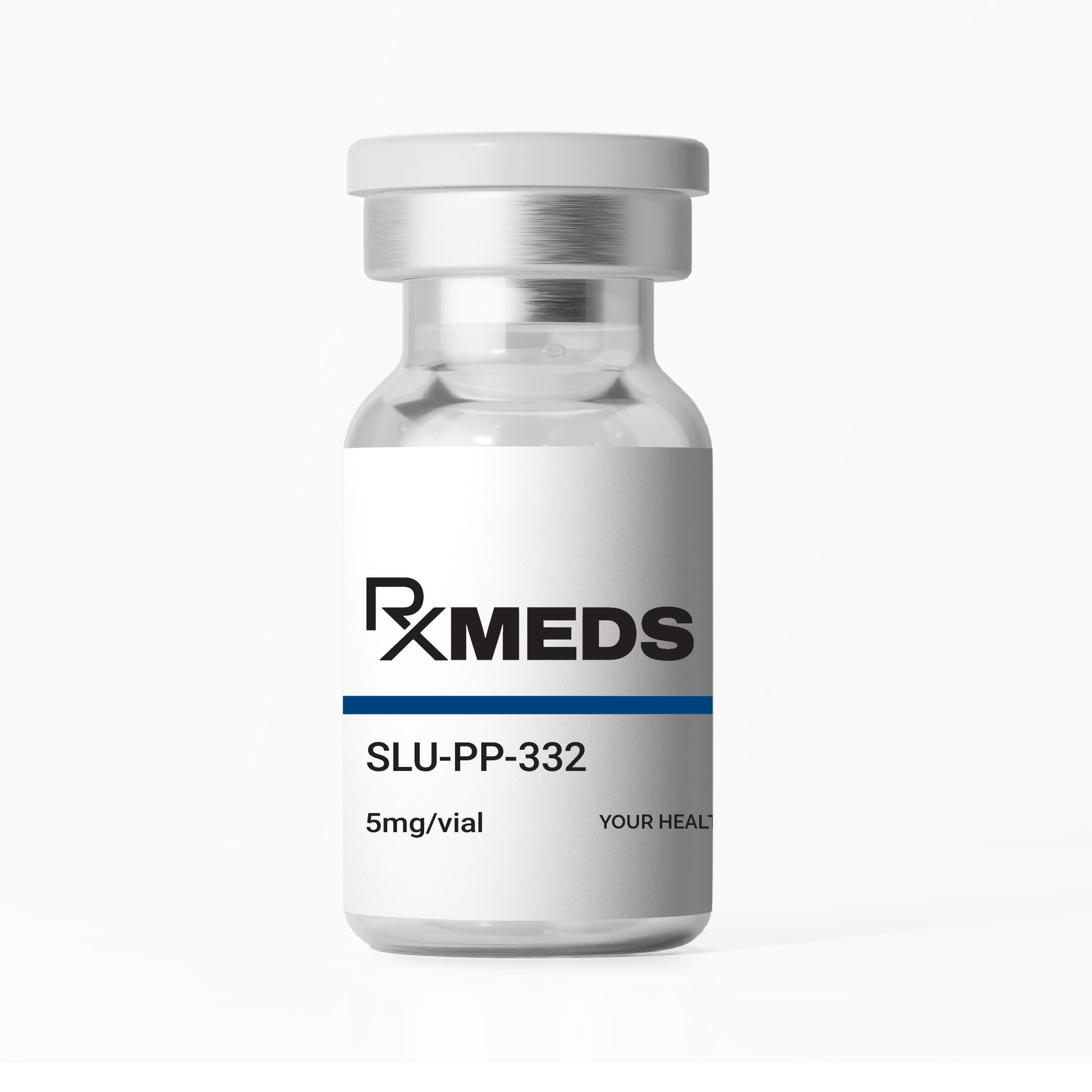
SLU-PP-332
Imagine a compound that triggers many of the same cellular changes exercise produces, without the actual workout. That’s the idea behind SLU-PP-332, a small molecule developed by researchers at Saint Louis University.
How SLU-PP-332 Works
Scientists designed this molecule to activate estrogen-related receptors (ERRs), specifically ERRα, ERRβ, and ERRγ. Physical activity normally switches on these receptors. In turn, they trigger changes related to energy metabolism and muscle function. By activating these receptors artificially, researchers hope to replicate some of exercise’s metabolic benefits at a cellular level.
What Early Research Shows
In animal studies, the compound increased slow-twitch muscle fibers. These fibers support endurance and fat-burning capacity. Additionally, mice given the compound showed improved running endurance. They also showed better metabolic markers, even without extra training. Beyond muscle effects, early research points to potential benefits for obesity and metabolic syndrome. The compound appears to boost calorie burning. It also seems to improve glucose processing in the body.
Current Limitations in the Research
Despite these promising animal results, human studies don’t exist yet. Scientists have only tested the compound in labs and rodents. As a result, researchers haven’t determined safe human dosing. They also haven’t confirmed how it behaves in the human body. Furthermore, no one has ruled out side effects that might only appear in people.
Safety and Legal Status
No regulatory agency has approved this substance for human use. The FDA hasn’t reviewed it either. Therefore, it exists purely as a research chemical. If you come across claims about human use or performance benefits, treat them with skepticism. The research is still too early to support those claims.
If you want to follow the science behind exercise mimetics, published studies on platforms like PubMed offer deeper insight.
FAQ
What does SLU-PP-332 do?
It activates estrogen-related receptors in cells, triggering metabolic changes similar to what happens during exercise.
Has it been tested on humans?
No. Researchers have only studied it in animals and lab settings so far.
What were the animal study results?
Mice showed increased endurance, more slow-twitch muscle fibers, and improved metabolic markers without additional exercise.
Is it legal to buy?
It’s sold as a research chemical only, not for human consumption.
Could it replace exercise someday?
That’s the long-term hope, but it’s too early to say. Human trials need to happen first to confirm safety.
Be the first to review “SLU-PP-332 – 5mg – A Guide to This Exercise Mimetic Compound”
Related products
Peptides
Peptides
Reviews
There are no reviews yet.