NAD+
Every cell in your body runs on a coenzyme most people have never heard of. NAD+ (nicotinamide adenine dinucleotide) powers hundreds of biological reactions, and as you age, your natural supply quietly dwindles. That decline has turned this molecule into one of the most talked-about compounds in longevity research.
What This Coenzyme Actually Does
Your mitochondria rely on NAD+ to convert food into usable energy, a process happening constantly in every cell. Beyond energy production, it also supports DNA repair and activates sirtuins, a group of proteins linked to cellular aging and longevity. Researchers have tied declining NAD+ levels to fatigue, slower metabolism, and age-related decline, which explains why so much attention now focuses on restoring it.
Why a 100mg Vial Matters for Research
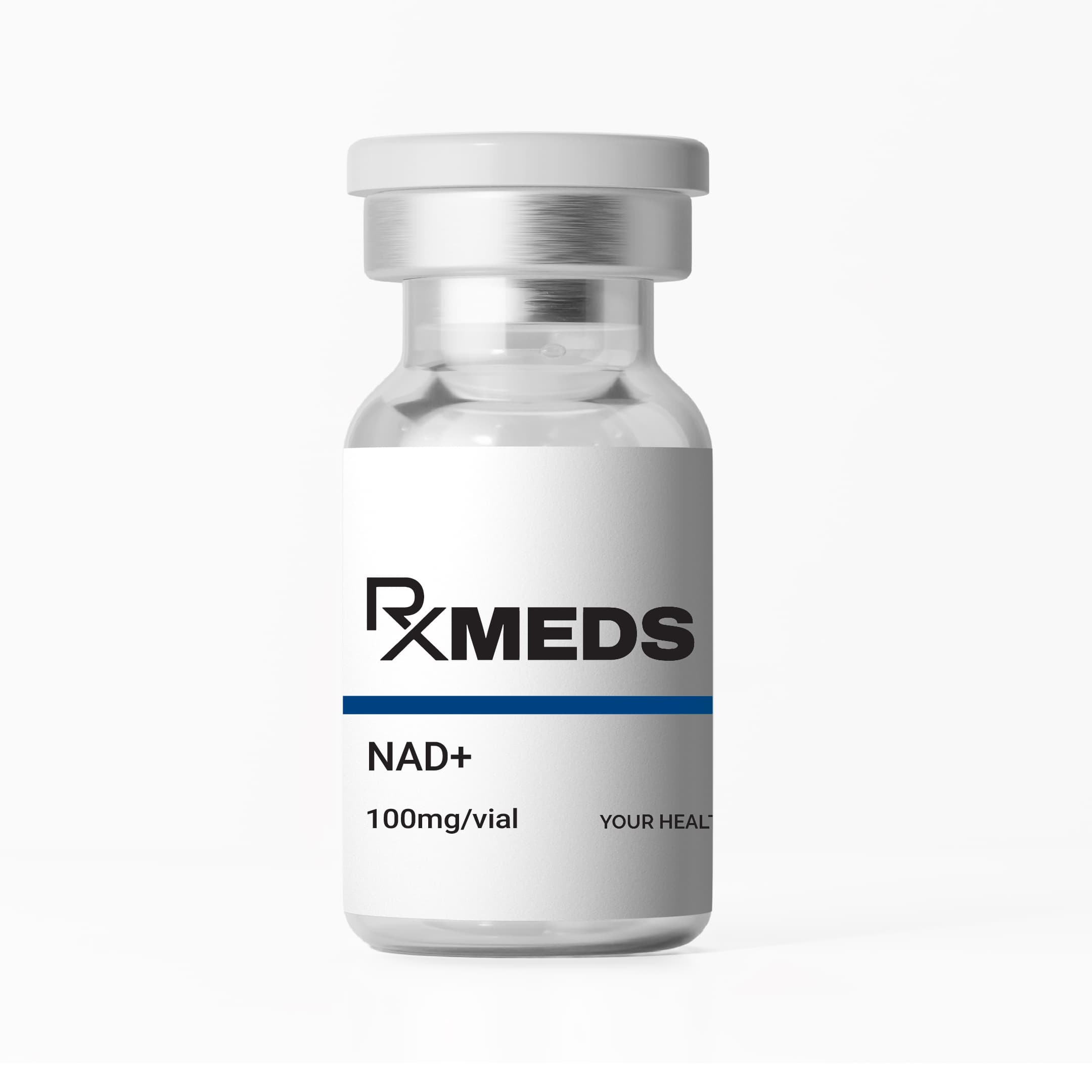
Suppliers package this compound at 100mg concentrations specifically for researchers who need higher, more precise doses than lower-strength alternatives allow. The vial typically arrives as a lyophilized powder, requiring reconstitution with bacteriostatic water before use. This concentration suits studies examining energy metabolism, mitochondrial function, or aging-related cellular changes, where researchers need enough compound to test meaningful dose ranges.
What the Research Shows on NAD+
Animal studies link restored NAD+ levels to improved mitochondrial function, better metabolic markers, and even extended lifespan in some models. Human research remains earlier stage but has shown promise for improving energy levels, cognitive function, and markers of cellular aging. Separately, some studies explore its role in supporting liver health and muscle recovery, though researchers haven’t fully established these benefits through large-scale human trials.
Handling and Storage
Once reconstituted, this compound degrades faster than many other research peptides, so proper storage becomes critical. Researchers should keep the mixed solution refrigerated and protected from light, using it within a short window to preserve potency. Temperature fluctuations or extended exposure to light can break down the compound before it’s even used.
Where It Stands Regulatory-Wise
No regulatory body, including the FDA, has approved NAD+ as a treatment for aging or any specific medical condition.
FAQ
What does a 100mg NAD+ vial contain?
A lyophilized (freeze-dried) powder form that requires reconstitution with bacteriostatic water before research use.
Why do researchers use the 100mg concentration?
It allows for higher, more precise dosing in studies examining energy metabolism and cellular aging compared to lower-strength options.
How long does reconstituted NAD+ last?
Only a short window — keep it refrigerated and away from light, since it degrades faster than many other compounds once mixed.
Is NAD+ approved for anti-aging treatment?
No. The FDA hasn’t approved it for aging or any specific condition, though some clinics offer it for wellness purposes outside formal approval.
What does current research suggest about NAD+?
Animal studies show improved mitochondrial function and metabolic markers, while human research remains early but promising for energy and cognitive support.
Be the first to review “NAD+ 100mg Vial: Uses and Research Guide”
Related products
Peptides
Reviews
There are no reviews yet.