

MOTS-c
For decades, mitochondria got reduced to a single job description: the “powerhouse of the cell.” That label undersold them. Buried in mitochondrial DNA, scientists eventually found a short genetic sequence capable of producing its own signaling peptide — MOTS-c — and it turned out to do far more than generate energy quietly in the background.
Why Its Origin Matters
Most peptides trace back to the nucleus, the cell’s main genetic library. This one doesn’t. Instead, researchers found it encoded within mitochondrial DNA itself, which places it in a small, unusual category of molecules that communicate on behalf of your cell’s energy system. Because of this distinction, it behaves differently too — rather than acting like a typical hormone, it seems to function as a direct messenger for metabolic stress and energy balance.
Inside the MOTS-c 10mg Vial
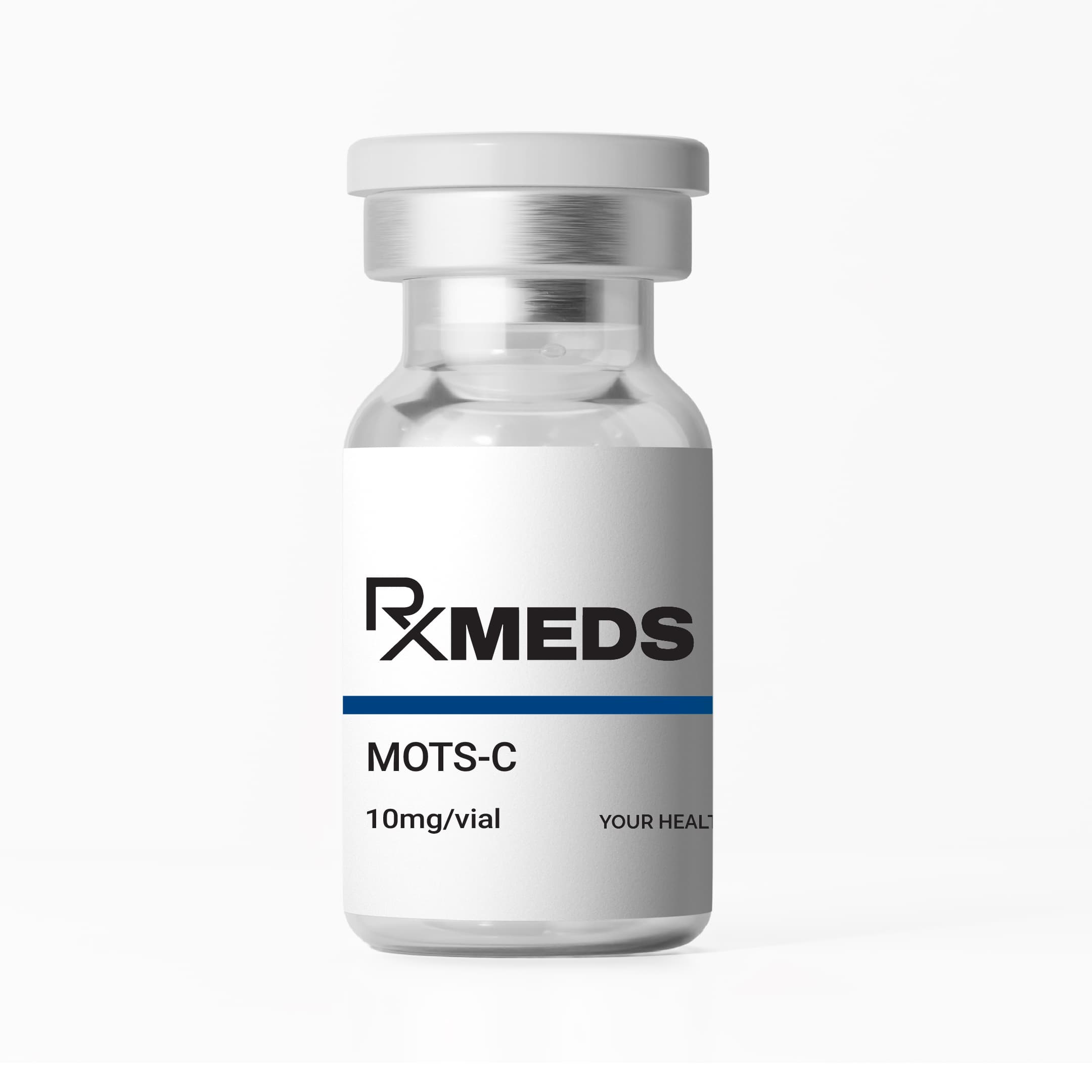
Labs generally receive this peptide as a freeze-dried powder, sold in 10mg vials for research use. Before use, researchers mix it with bacteriostatic water, then administer it subcutaneously in most study designs. Choosing the 10mg strength over smaller options gives a lab more flexibility — for instance, multiple doses from one vial, less frequent reconstitution, and more consistency across longer studies.
What’s Fueling the Metabolic Buzz
Mouse studies did most of the heavy lifting here. Specifically, researchers noticed that MOTS-c activates AMPK, essentially a built-in fuel gauge inside cells that kicks in when energy runs low. As a result, mice receiving the peptide developed better insulin sensitivity, tighter glucose control, and resistance to weight gain from high-fat diets — all without any changes to their activity or food intake. In addition, a separate thread of research points to exercise-related benefits, with some data suggesting it improves endurance and muscle performance in ways that echo actual physical training.
The Human Data Gap
Here’s where enthusiasm needs tempering. Unlike peptides with years of clinical trial history behind them, this one hasn’t moved far past animal and cell-based research. Therefore, scientists simply haven’t run the large human trials needed to confirm dosing, safety, or real-world benefit in people yet.
Handling It Properly
Once mixed, the solution needs refrigeration and should get used within a short window — otherwise, potency fades the longer it sits. Furthermore, on the legal side, no agency, FDA included, has approved this peptide for human use. It exists purely as a research compound, so anyone coming across it outside a lab setting should approach it with real caution.
worth a look.
FAQ
What makes MOTS-c different from other peptides?
Scientists traced its origin to mitochondrial DNA rather than the cell’s main genome, which is unusual among signaling peptides.
What’s inside a 10mg vial?
A freeze-dried powder that needs reconstitution with bacteriostatic water before researchers can use it.
What have animal studies found?
Mice treated with it showed improved insulin sensitivity, better glucose control, and resistance to diet-induced weight gain.
Has anyone tested it in humans?
Not extensively. Most evidence still comes from animal and cellular studies, with human trials lagging behind.
Can you legally buy it as a treatment?
No. It’s sold strictly as a research chemical, with no FDA approval for human therapeutic use.
Be the first to review “MOTS-c 10mg: The Mitochondrial Peptide”
Related products

Peptides
Peptides
Peptides
Reviews
There are no reviews yet.