
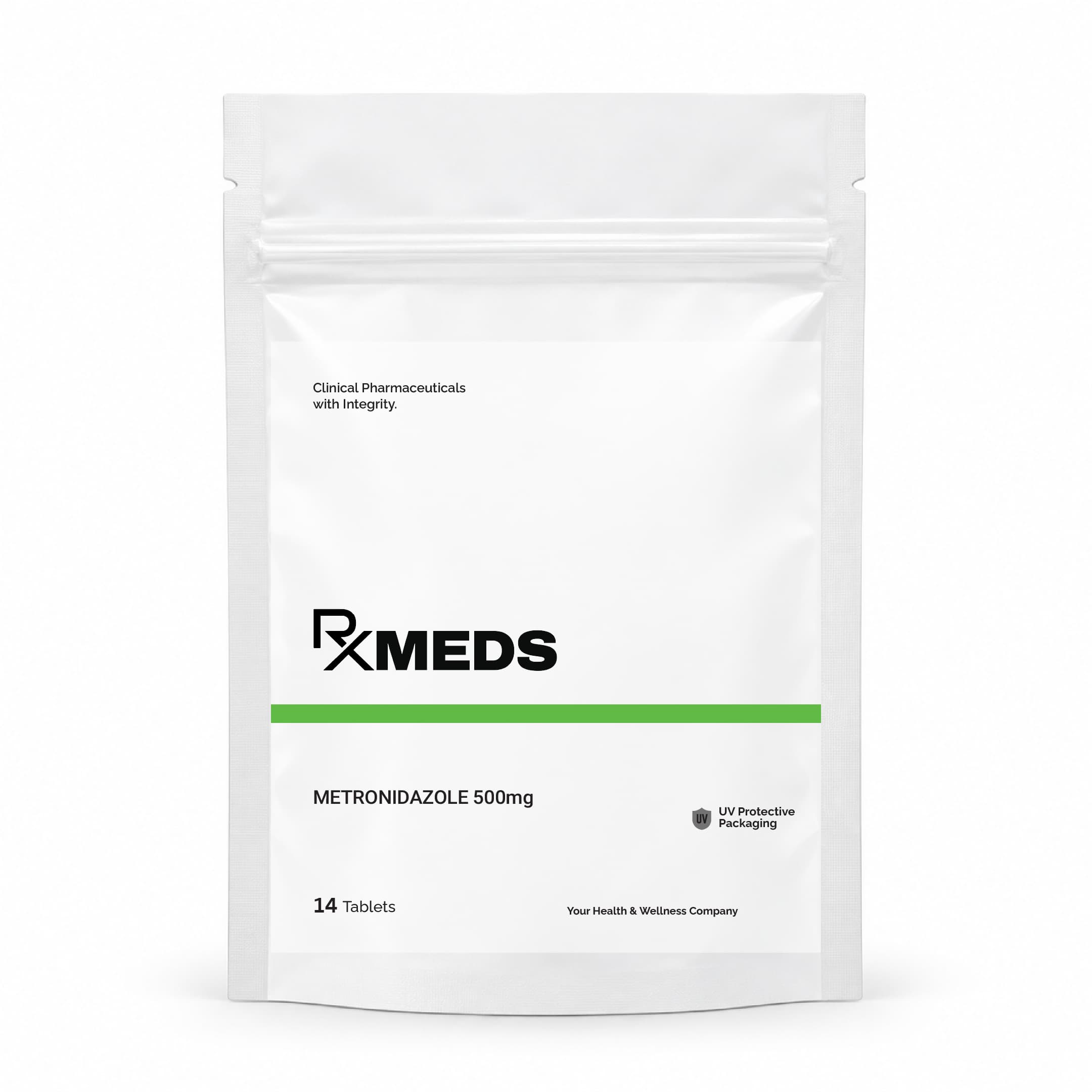


Metronidazole 500mg
Bacterial infections and parasitic infections usually require completely different treatments. Metronidazole breaks that pattern, tackling both categories through a single mechanism that’s remained a go-to option in medicine for decades.
A Dual-Purpose Antimicrobial
Pharmaceutical researchers developed this medication in the 1950s, originally targeting a specific parasitic infection before doctors discovered its broader antimicrobial properties. That early discovery expanded its use considerably, since it proved effective against certain anaerobic bacteria alongside its original parasitic targets. This dual action explains why it remains a staple antibiotic across such a wide range of infection types today.
How It Destroys Pathogens
This medication works by entering bacterial and parasitic cells, where it gets converted into a reactive form that damages the pathogen’s DNA. That DNA damage prevents the organism from replicating or repairing itself, ultimately leading to its death. Because this mechanism specifically targets organisms that thrive without oxygen, it works selectively against anaerobic bacteria and certain parasites while leaving many other bacteria unaffected.
What a 500mg Dose Treats
Doctors prescribe this strength for bacterial vaginosis, certain sexually transmitted infections, and intestinal parasitic infections like giardiasis. It’s also commonly used for anaerobic bacterial infections affecting the abdomen, pelvis, and skin, often alongside other antibiotics for more complete coverage. Treatment duration varies significantly depending on the specific infection, ranging from a single dose for some conditions to a week or more for others.
Important Precautions During Treatment
Doctors consistently warn patients to avoid alcohol entirely while taking this medication and for several days afterward, since combining the two can cause severe nausea, vomiting, and flushing. This interaction, sometimes called a disulfiram-like reaction, stands out as one of the most important precautions associated with this drug specifically. Patients should also complete the full prescribed course, even if symptoms improve early, to prevent the infection from returning or developing resistance.
Safety and Side Effects
Reported side effects include nausea, a metallic taste in the mouth, and stomach upset, generally considered manageable for most patients. More serious but rare effects can include nerve damage with prolonged use and allergic reactions in sensitive individuals. Patients with liver problems or blood disorders should discuss their specific risks with their doctor before starting treatment.
FAQ
What infections does Metronidazole 500mg treat?
Doctors prescribe it for bacterial vaginosis, certain STIs, intestinal parasitic infections, and anaerobic bacterial infections.
Why should alcohol be avoided during treatment?
Combining alcohol with this medication can trigger a severe reaction causing nausea, vomiting, and flushing.
How was this medication originally discovered?
Researchers developed it in the 1950s to treat a parasitic infection, later discovering its effectiveness against anaerobic bacteria too.
What’s the most commonly reported side effect?
A metallic taste in the mouth appears frequently, alongside nausea and stomach upset.
Should the full course be completed even if symptoms improve?
Yes. Stopping early can allow the infection to return or contribute to antibiotic resistance.
Be the first to review “Metronidazole 500mg: Antibiotic Treatment Guide”
Related products






Reviews
There are no reviews yet.