
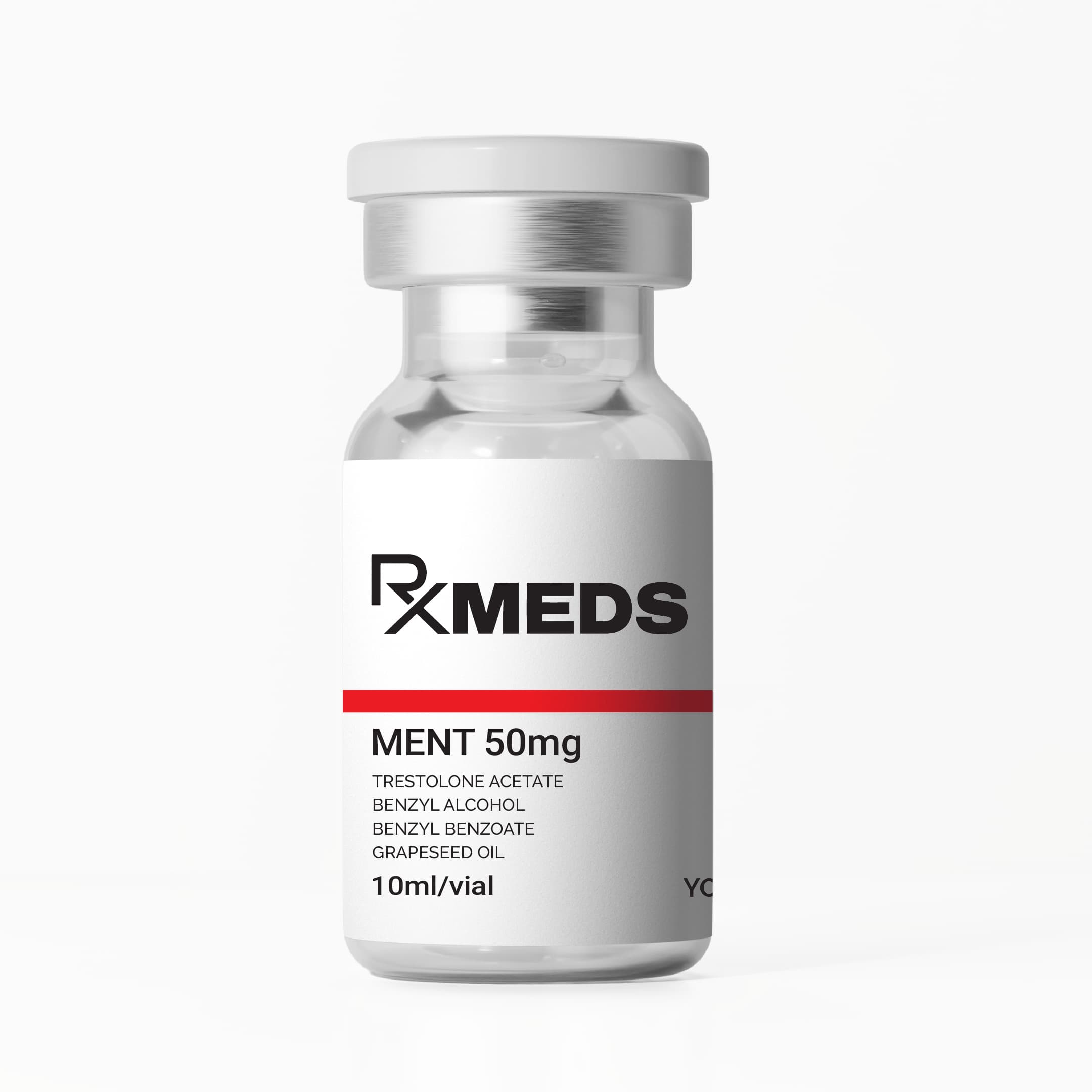
MENT (Trestolone) 50mg
Researchers have long searched for a compound that builds muscle without some of testosterone’s downsides. MENT (Trestolone) emerged from that effort, drawing attention for its unusual potency and distinct hormonal profile.
A Research Compound With Contraceptive Origins
Scientists developed this compound decades ago, originally studying it as a potential male hormonal contraceptive. Researchers noted its strong ability to suppress natural testosterone production, a trait useful for that original purpose. Over time, attention shifted toward its remarkably potent muscle-building effects, which proved far stronger than testosterone itself. As a result, it eventually drew interest from performance-focused research circles rather than contraceptive development alone.
How It Affects Muscle and Hormones
This compound binds strongly to androgen receptors, triggering a significant increase in protein synthesis within muscle tissue. Unlike testosterone, it doesn’t convert into DHT, the hormone linked to prostate growth and related side effects. Additionally, researchers note it still converts to estrogen, meaning related side effects remain possible despite its unique profile. Because of its potency, even small doses produce effects far beyond what similar doses of testosterone typically achieve.
What a 50mg/10ml Dose Involves
This formulation typically gets administered through intramuscular injection in research settings. Because this compound carries a short ester and clears quickly, it requires frequent dosing to maintain stable levels. Therefore, research protocols generally call for daily or near-daily administration rather than weekly dosing. Given its potency, researchers often describe doses far lower than typical testosterone-based compounds.
Why It Draws Interest Among Researchers
Unlike many other compounds, this one doesn’t stimulate prostate growth the way DHT-related steroids do, making it notably distinct in that regard. Furthermore, its strength means smaller amounts can produce effects comparable to much larger doses of other compounds. These qualities keep it a subject of ongoing research interest, despite its chemical similarity to other suppressive hormonal agents. Importantly, this compound remains intended strictly for laboratory and research purposes, without FDA approval for human use.
Safety and Research Considerations
Reported effects in research settings include significant natural testosterone suppression and estrogen-related side effects like water retention. Because of its potency, researchers note the suppression from this compound can be more severe than that of testosterone alone. Recovery protocols become an especially important consideration, given how strongly it shuts down natural hormone production. Because this compound lacks FDA approval, no established human dosing guidelines or long-term safety data currently exist. Therefore, researchers should always follow proper laboratory handling and storage protocols.
FAQ
What was MENT originally developed for?
Researchers originally studied it as a potential male hormonal contraceptive before noting its muscle-building potency.
Why doesn’t this compound affect the prostate like testosterone?
It doesn’t convert into DHT, the hormone linked to prostate growth and related side effects.
How is dosing different from testosterone-based compounds?
Its short ester and high potency mean smaller, more frequent doses compared to typical testosterone protocols.
Is MENT approved for human use?
No. It remains strictly for laboratory and research purposes, without FDA approval.
What’s a key safety concern with this compound?
Significant testosterone suppression ranks as a major concern, often more severe than with testosterone alone.
Be the first to review “MENT (Trestolone) 50mg: Research Steroid Guide”
Related products
Anabolic Orals
Anabolic Orals
Anabolic Injectibles
Anabolic Orals
Anabolic Injectibles
Anabolic Injectibles
Anabolic Injectibles
Anabolic Injectibles
Reviews
There are no reviews yet.