
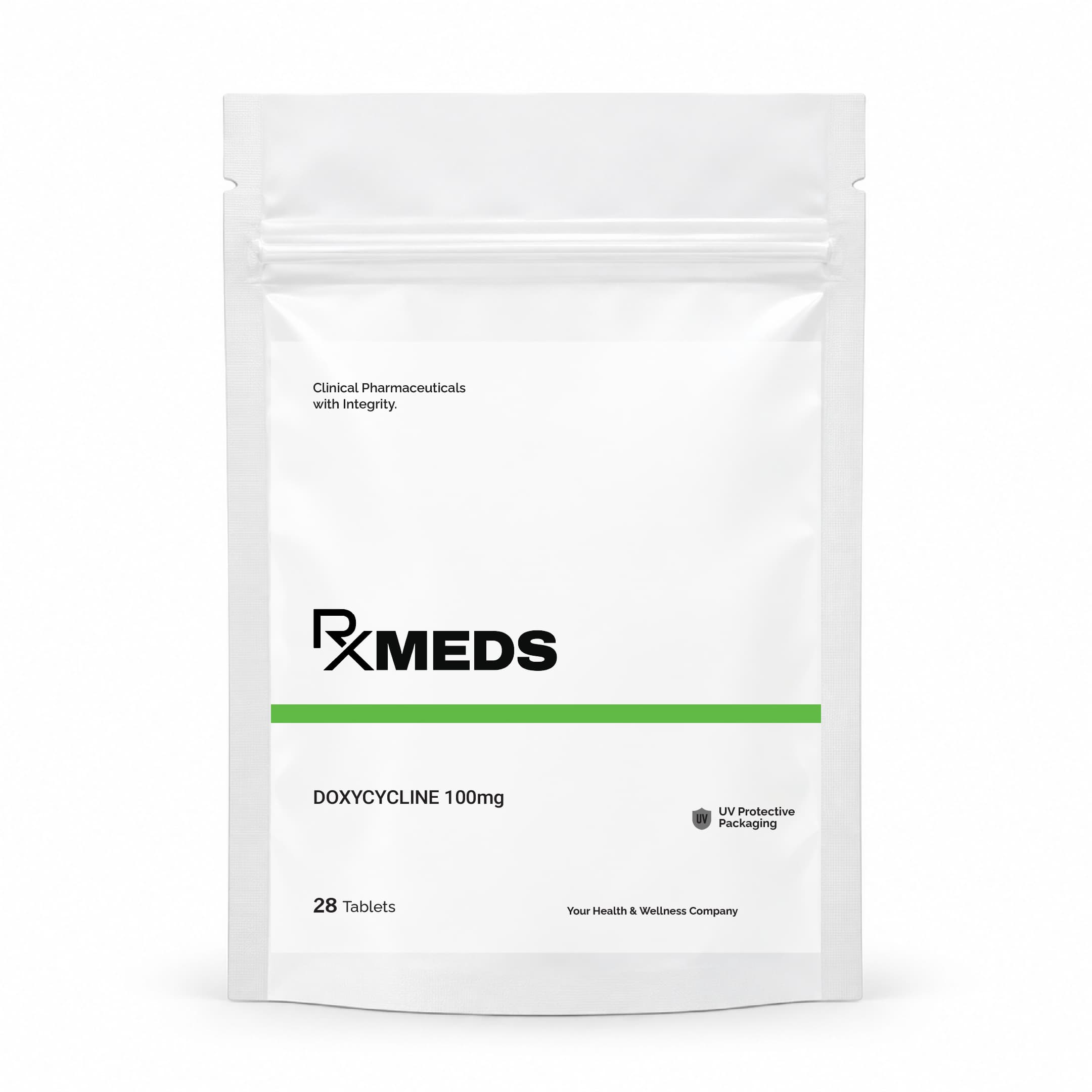
Doxycycline 100mg
Few antibiotics cover as much ground as Doxycycline. From acne to malaria prevention, this tetracycline-class medication has earned a spot in medicine cabinets and travel kits alike for decades.
A Versatile Tetracycline Antibiotic
Pharmaceutical researchers developed this medication as part of the tetracycline class, refining it to offer better absorption and a longer duration of action than earlier drugs in that family. Scientists designed it to work against a broad range of bacteria, making it useful across far more conditions than many other antibiotics. That versatility explains why it remains a go-to option across so many different medical specialties today.
How It Stops Bacterial Growth
This medication works by binding to bacterial ribosomes, the cellular structures bacteria use to build proteins essential for growth and survival. Blocking that protein production stops bacteria from multiplying, allowing the immune system to clear the remaining infection. Because this mechanism targets a process specific to bacterial cells, the medication doesn’t harm human cells through the same pathway.
What a 100mg Dose Treats
Doctors prescribe this strength for a wide range of infections, including respiratory infections, urinary tract infections, acne, and certain sexually transmitted infections. It’s also commonly prescribed for tick-borne illnesses like Lyme disease, along with skin infections and some types of pneumonia. Patients typically take it once or twice daily, often with a full glass of water to reduce throat irritation.
A Go-To for Travelers
Doctors frequently prescribe this medication for malaria prevention in travelers visiting high-risk regions, taken daily starting before travel and continuing for a period afterward. It also sees use treating traveler’s diarrhea in certain cases, adding to its reputation as a practical option for international travel. This broad applicability sets it apart from antibiotics with narrower approved uses.
Important Precautions During Treatment
Patients taking this medication need to avoid prolonged sun exposure, since it can cause heightened sensitivity leading to severe sunburn. Doctors also advise against taking it with dairy products, antacids, or calcium supplements, since these can bind to the medication and reduce its absorption. Pregnant women and young children typically avoid this medication, since it can affect developing bones and teeth.
Safety and Side Effects
Reported side effects include nausea, stomach upset, and increased sun sensitivity, generally manageable with proper precautions. More serious but rare effects can include esophageal irritation, particularly if the medication isn’t taken with enough water. Patients should complete the full prescribed course, even if symptoms improve early, to prevent the infection from returning or developing resistance.
FAQ
What infections does Doxycycline 100mg treat?
Doctors prescribe it for respiratory infections, UTIs, acne, Lyme disease, and certain STIs, among other conditions.
Why is it popular for travelers?
It’s commonly prescribed for malaria prevention and sometimes for traveler’s diarrhea, making it a practical option abroad.
Why should sun exposure be limited during treatment?
This medication increases sun sensitivity, raising the risk of severe sunburn with prolonged exposure.
Can it be taken with dairy or supplements?
No. Dairy, antacids, and calcium supplements can bind to the medication and reduce how well it’s absorbed.
Who should avoid this medication?
Pregnant women and young children typically avoid it, since it can affect developing bones and teeth.
For more Research guides, come visit us at Research health Co.
Be the first to review “Doxycycline 100mg: Antibiotic Treatment Guide”
Related products
Med Care
Reviews
There are no reviews yet.