
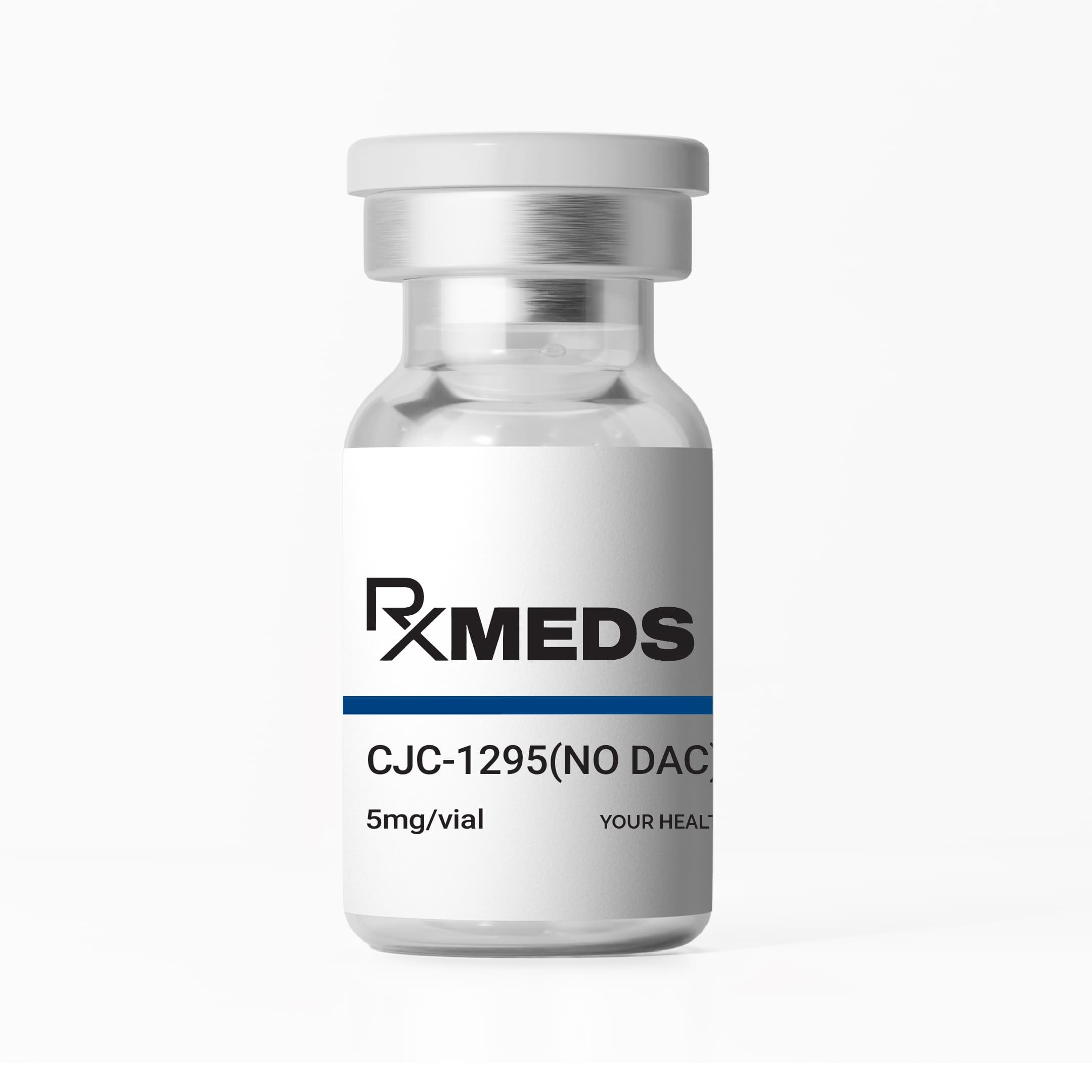
CJC-1295 No DAC
Two versions of the same peptide family exist, and researchers often confuse them. CJC-1295 comes with and without a component called DAC, and that single difference changes how the compound behaves in the body almost entirely.
What Sets the No DAC Version Apart
The original CJC-1295 includes a Drug Affinity Complex, or DAC, which binds to albumin in the blood and extends the peptide’s activity for days. The No DAC version strips that component away, leaving a shorter-acting peptide that researchers often know by another name: Mod GRF 1-29. Without DAC, the compound clears the body within an hour, producing a sharper, more natural pulse of hormone release rather than a sustained elevation.
How It Stimulates Growth Hormone
This peptide functions as a growth hormone-releasing hormone (GHRH) analog, meaning it mimics the natural hormone that signals the pituitary gland to release growth hormone. Because it acts quickly and clears fast, researchers often pair it with growth hormone-releasing peptides like Ipamorelin or GHRP-2, since the two work through different receptor pathways and can produce a stronger combined pulse than either compound alone.
Inside the 5mg Vial
Suppliers typically package this peptide as a freeze-dried powder, with a 5mg vial offering enough material for multiple doses once reconstituted with bacteriostatic water. Researchers usually administer it via subcutaneous injection, often multiple times daily given its short half-life. The 5mg strength suits longer research cycles, since it reduces how frequently a fresh vial needs preparing compared to smaller options.
Why Researchers Prefer the Shorter Action
The quick clearance of this version appeals to researchers studying natural, pulsatile hormone release patterns rather than the sustained elevation that longer-acting peptides produce. Some researchers believe this pattern more closely mimics the body’s own growth hormone rhythms, which naturally occur in pulses rather than constant elevation. That theoretical advantage keeps this version popular despite requiring more frequent dosing than its DAC-containing counterpart.
Safety and Legal Standing
Reported side effects include injection site redness, flushing, and occasional headache, generally considered mild compared to many research compounds. No regulatory agency, including the FDA, has approved this peptide for human use.
FAQ
What’s the difference between CJC-1295 and the No DAC version?
The standard version includes DAC, extending its activity for days, while the No DAC version clears within an hour for a sharper hormone pulse.
What’s included in a 5mg vial?
A freeze-dried powder requiring reconstitution with bacteriostatic water before administering via subcutaneous injection.
Why do researchers combine it with other peptides?
Pairing it with compounds like Ipamorelin or GHRP-2 uses different receptor pathways, producing a stronger combined growth hormone pulse.
How often do research protocols dose it?
Often multiple times daily, since its short half-life means effects don’t last as long as the DAC version.
Is it approved for human use?
No. It’s sold strictly as a research compound
Be the first to review “CJC-1295 No DAC 5mg: A Research Guide”
Related products
Reviews
There are no reviews yet.