
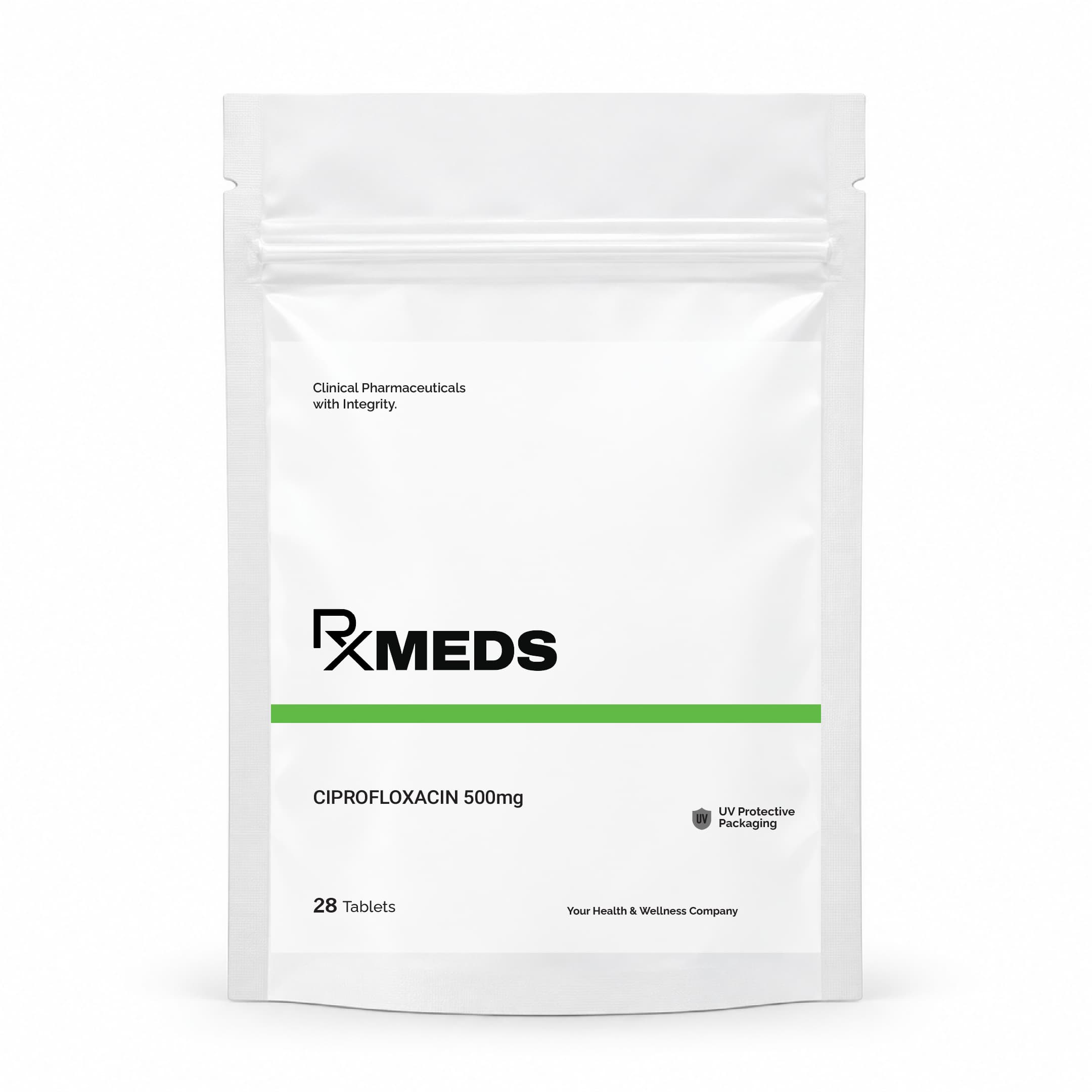
Ciprofloxacin 500mg
Few antibiotics work through quite as direct a mechanism as Ciprofloxacin. Instead of blocking protein production like many other classes, this medication attacks bacteria at the DNA level, disrupting their ability to replicate entirely.
A Powerful Fluoroquinolone Antibiotic
Pharmaceutical researchers developed this medication as part of the fluoroquinolone class, designing it to target a broad range of bacteria through a mechanism distinct from older antibiotic families. Since its approval, it’s become one of the most widely prescribed antibiotics for serious bacterial infections, particularly those resistant to other treatment options. Its effectiveness against difficult-to-treat infections cemented its place as a go-to option in many clinical settings.
How It Destroys Bacteria
This medication works by inhibiting enzymes bacteria need to replicate and repair their DNA, specifically targeting DNA gyrase and topoisomerase IV. Blocking these enzymes prevents bacterial DNA from unwinding properly, stopping the bacteria from dividing and ultimately leading to cell death. Because this mechanism targets processes essential to bacterial survival, it works effectively across numerous bacterial species.
What a 500mg Dose Treats
Doctors prescribe this strength for urinary tract infections, certain types of pneumonia, skin infections, and bone or joint infections. It’s also used for more serious conditions like anthrax exposure and certain gastrointestinal infections, reflecting its broad-spectrum effectiveness. Patients typically take it twice daily, with treatment duration varying from several days to a few weeks depending on the infection’s severity and location.
When Doctors Reach for This Antibiotic
Doctors often reserve this medication for infections that haven’t responded to other antibiotics, or for situations requiring broad-spectrum coverage before lab results identify the specific bacteria involved. This approach helps preserve its effectiveness for cases where other options fall short, since overuse can contribute to bacterial resistance over time. Its ability to penetrate bone and other tissues well also makes it a preferred choice for certain hard-to-treat infections.
Important Precautions During Treatment
Patients taking this medication should avoid dairy products, calcium-fortified foods, and antacids near dosing times, since these can interfere with absorption. Doctors also advise caution with sun exposure, since this medication can increase sensitivity to sunlight. Patients should complete the full prescribed course, even if symptoms improve early, to prevent the infection from returning or contributing to resistance.
Safety and Side Effects
Reported side effects include nausea, diarrhea, and headache, generally manageable for most patients. More serious but rarer risks include tendon damage or rupture, particularly in older patients or those taking corticosteroids alongside this medication. Patients should stop taking it and contact a doctor immediately if they experience tendon pain, swelling, or sudden joint discomfort during treatment.
FAQ
What infections does Ciprofloxacin 500mg treat?
Doctors prescribe it for UTIs, certain pneumonias, skin infections, and bone or joint infections, among other conditions.
How does this medication kill bacteria?
It blocks enzymes bacteria need to replicate their DNA, stopping bacterial division and leading to cell death.
Why do doctors sometimes reserve this antibiotic for certain cases?
It’s often used for infections resistant to other antibiotics, helping preserve its effectiveness and limit resistance development.
What should be avoided while taking this medication?
Dairy products, calcium-fortified foods, and antacids near dosing times, since these can reduce absorption.
What’s a serious risk to watch for during treatment?
Tendon damage or rupture, particularly in older patients or those also taking corticosteroids.
Be the first to review “Ciprofloxacin 500mg: Antibiotic Treatment Guide”
Related products
Reviews
There are no reviews yet.