
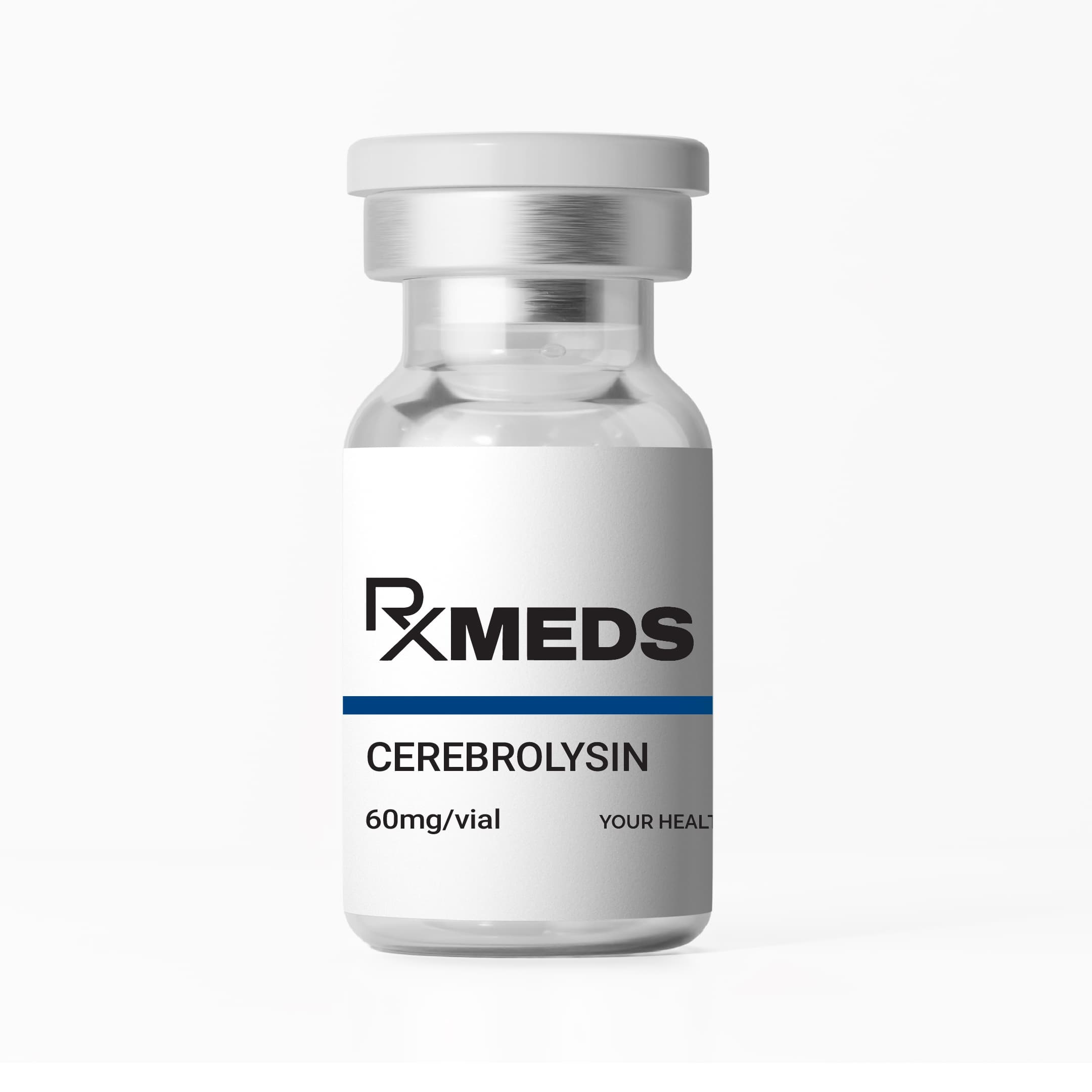
Cerebrolysin
Most peptides studied today contain a single, well-defined molecule. Cerebrolysin breaks that pattern entirely. Derived from purified pig brain proteins, it’s a complex mixture of peptides and amino acids, designed to mimic the brain’s own neurotrophic signaling rather than isolate one specific compound.
A Different Kind of Neuropeptide
Researchers in Austria developed this compound decades ago, extracting and purifying low-molecular-weight peptides from porcine brain tissue. Unlike single-sequence peptides, this formulation contains dozens of bioactive fragments, including compounds that resemble naturally occurring neurotrophic factors like BDNF and NGF. That broad composition sets it apart from most other research peptides, which typically isolate one targeted mechanism.
How It May Support Brain Function
Scientists believe this compound works by mimicking several neurotrophic factors simultaneously, molecules that support neuron growth, survival, and repair. Animal studies suggest it may reduce inflammation in brain tissue, support the formation of new neural connections, and protect existing neurons from damage during periods of reduced blood flow. Because it acts through multiple pathways at once, researchers often describe its mechanism as broader than single-target neuroprotective drugs.
Working With a 60mg Vial
Suppliers typically package this compound as a liquid solution rather than a freeze-dried powder, with 60mg representing a common concentration used in clinical and research settings. Most protocols call for intramuscular or intravenous administration, following dosing schedules established in stroke and brain injury research conducted primarily in Europe and Asia.
Where the Clinical Evidence Stands
Several countries, including Russia and parts of Europe and Asia, have approved this compound for treating stroke, traumatic brain injury, and certain dementia-related conditions. Clinical trials conducted in those regions report improvements in cognitive function and recovery outcomes among stroke patients. However, the FDA hasn’t approved it for any use in the United States, and larger trials meeting FDA standards remain limited, which keeps it outside mainstream North American medical practice.
Safety and Regulatory Notes
Reported side effects include dizziness, agitation, and injection site reactions, generally considered mild in existing clinical literature. Because it derives from animal brain tissue, researchers have also raised historical questions about prion-related risks, though modern purification methods address this concern directly. In the United States, it’s available only as an unapproved research or import product.
FAQ
What makes Cerebrolysin different from single-sequence peptides?
It’s a complex mixture of dozens of bioactive peptide fragments derived from purified pig brain tissue, rather than one isolated molecule.
What’s included in a 60mg vial?
A ready-to-use liquid solution, commonly used in intramuscular or intravenous administration without requiring reconstitution.
Is it approved for medical use anywhere?
Yes. Several countries, including Russia and parts of Europe and Asia, have approved it for stroke and brain injury treatment.
Is it FDA-approved in the United States?
No. The FDA hasn’t approved it, and it’s available domestically only as an unapproved research compound.
What does research suggest about its effects?
Studies link it to reduced brain inflammation, support for new neural connections, and protection of neurons during reduced blood flow.
Be the first to review “Cerebrolysin 60mg: The Neuropeptide Research Guide”
Related products
Peptides
Reviews
There are no reviews yet.